Monday, 23 February 2026
TSU, RU formalize partnership, hold Project ICSS seminar on environmental sustainability
by Honey Grace Sanchez (Intern)
Back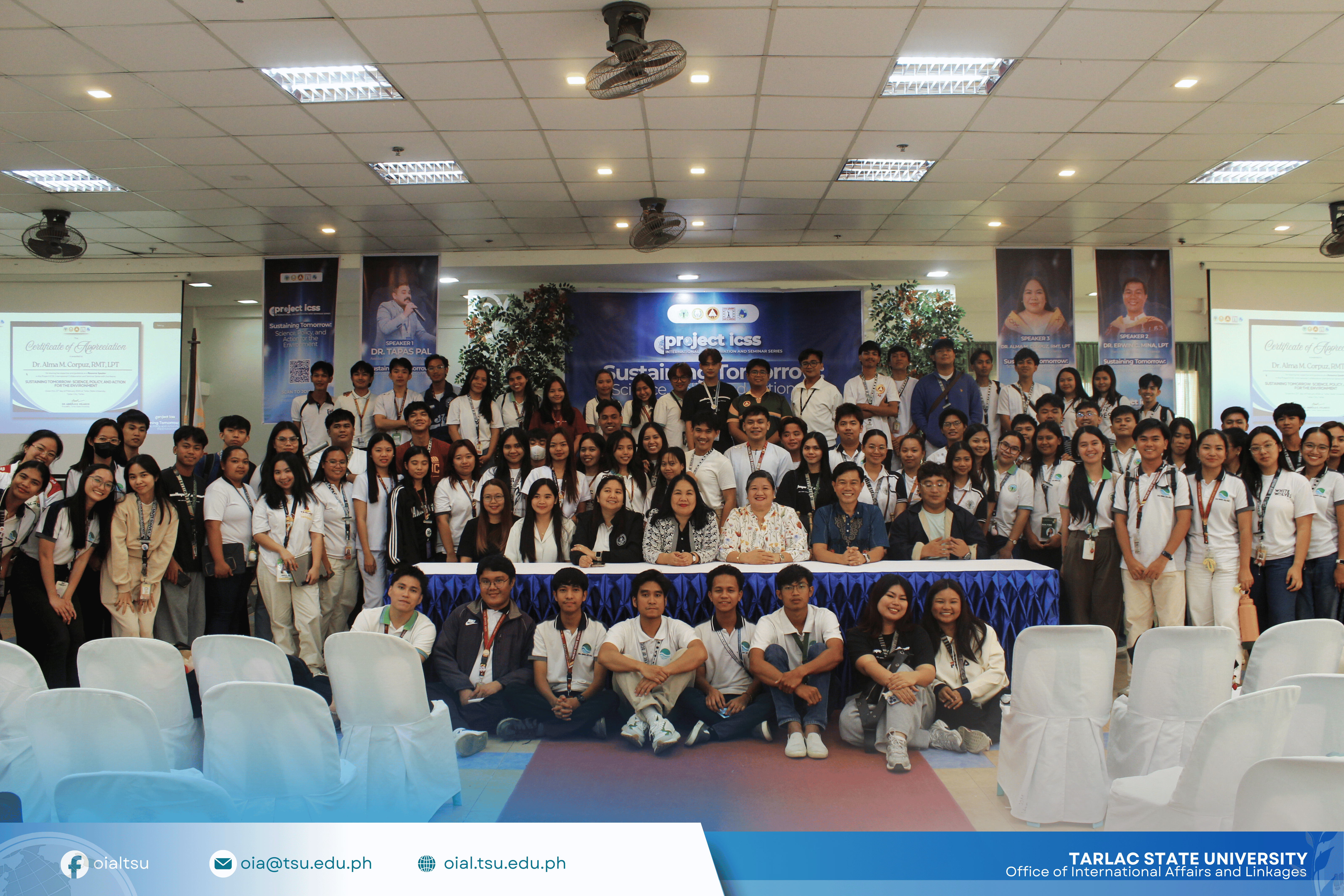
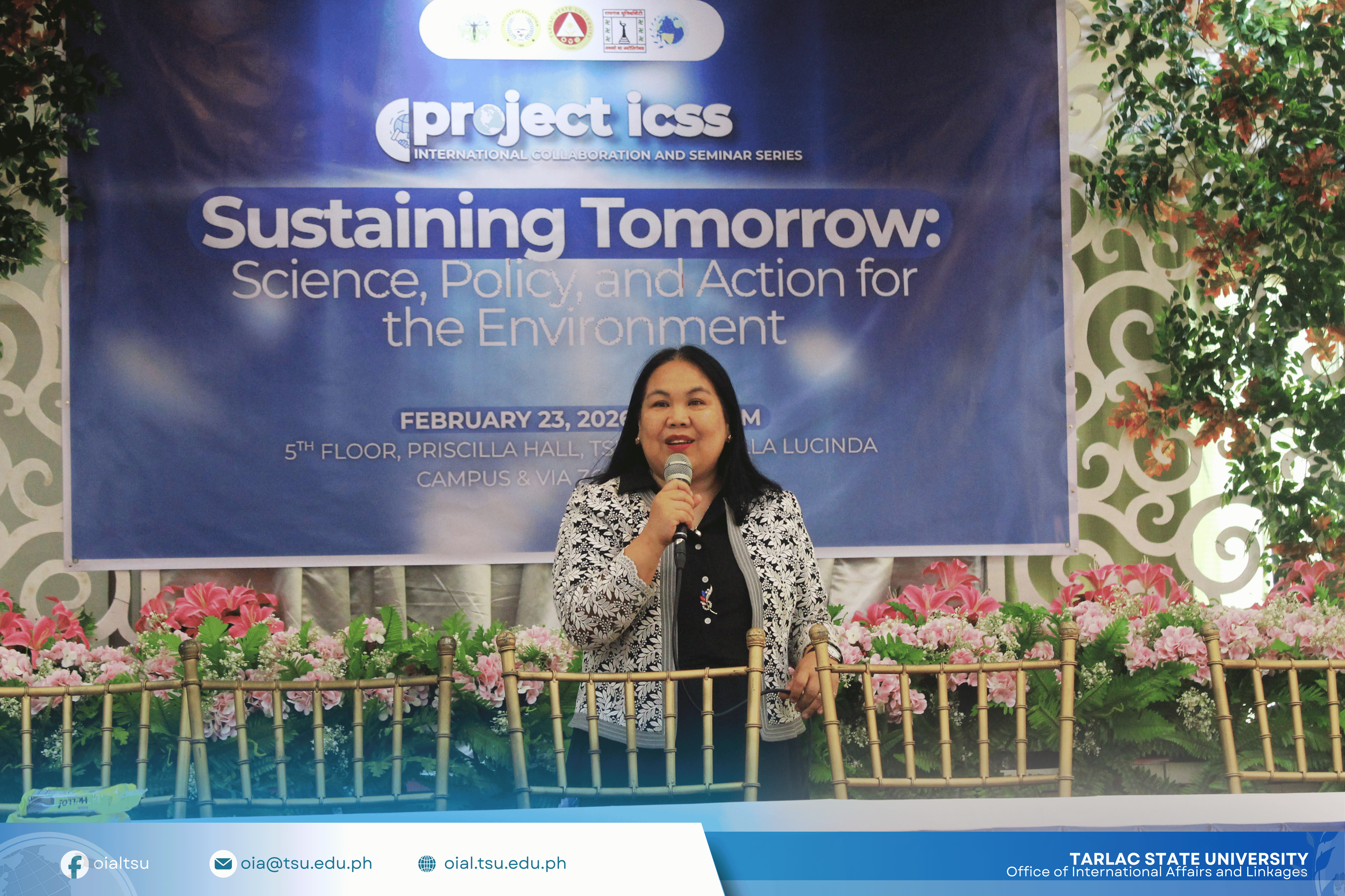
On February 23, 2026, Tarlac State University (TSU) and Raiganj University (RU) convened educators, alumni, and students for Project ICSS (International Collaboration and Seminar Series) under the theme “Sustaining Tomorrow: Science, Policy, and Action for the Environment.” Held at Priscilla Hall, TSU Hotel, Villa Lucinda Campus and streamed via Zoom, the event brought together complementary perspectives on local ecological knowledge, Indigenous policy integration, and scientific research translation into a unified call for environmental action.
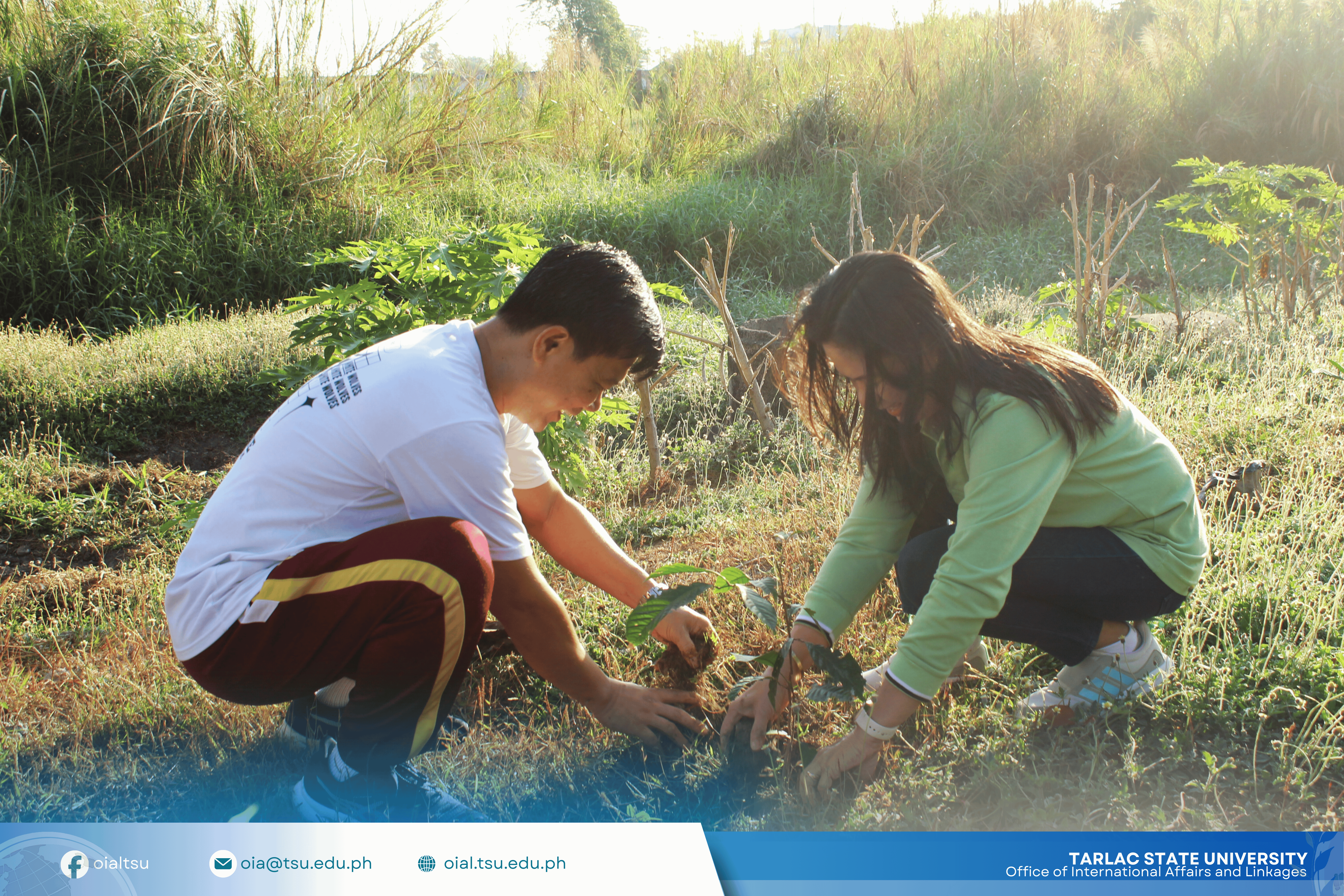
The first part of the engagement was a tree-planting activity held at the San Isidro Campus. Faculty members, staff, and students from the College of Science actively participated in the initiative, symbolizing the institutions’ shared commitment to environmental stewardship and sustainability.
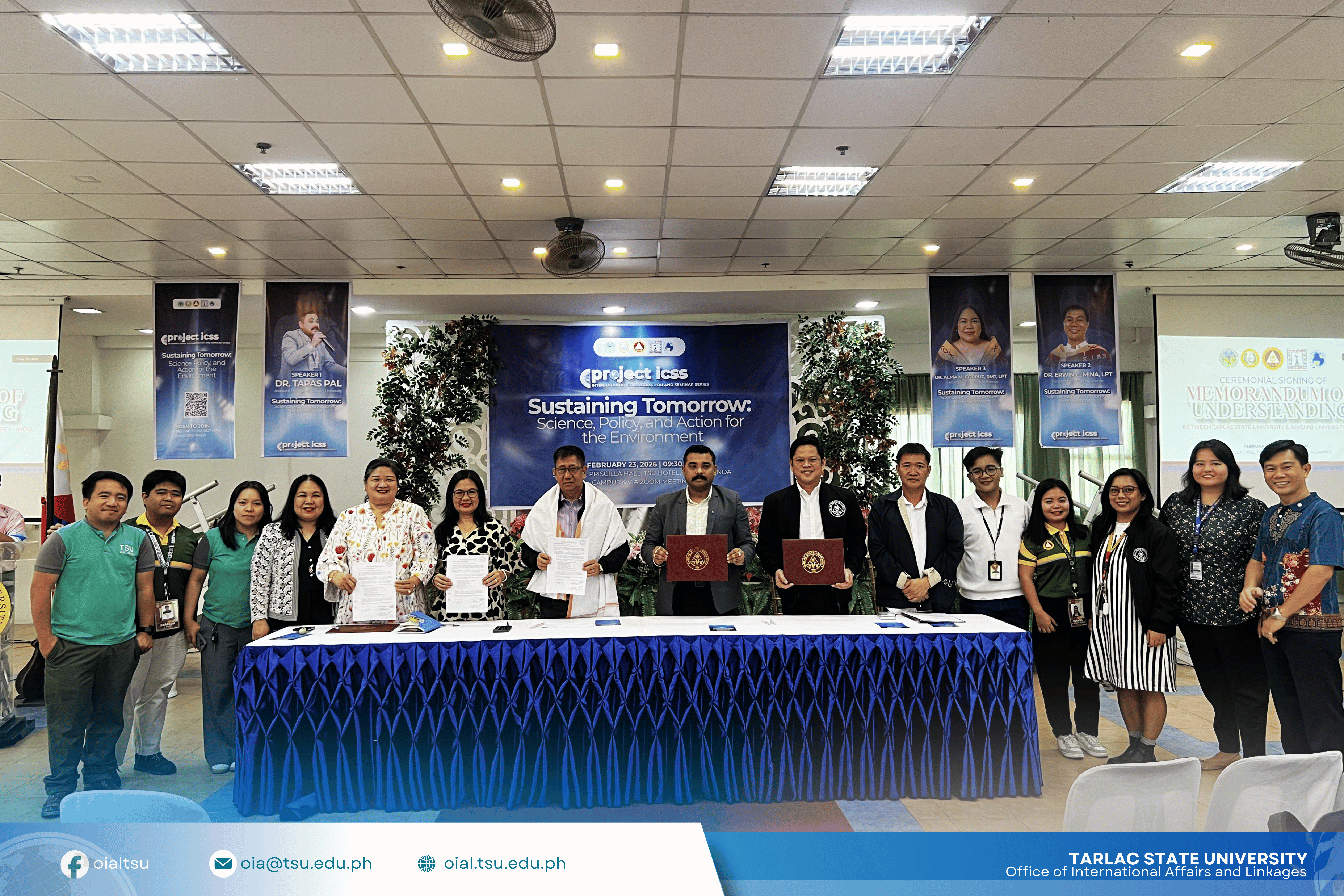
Following the tree-planting activity, a ceremonial signing of the Memorandum of Understanding (MOU) between TSU and RU was facilitated. Present during the ceremony were TSU President Arnold E. Velasco; Dr. Jasper Jay N. Mendoza, Vice President for Academic Affairs; Dr. Tapas Pal, Assistant Professor III at RU; Dr. Erwin P. Lacanlale, College of Education Dean; Dr. Alma M. Corpuz, Environmental Science Program Chairperson; Dr. Erwin C. Mina, Unit Head – General Sciences; and Dr. Cynthia G. Quiambao, MAED Physical Science Chairperson, marking a significant step in strengthening international academic collaboration.
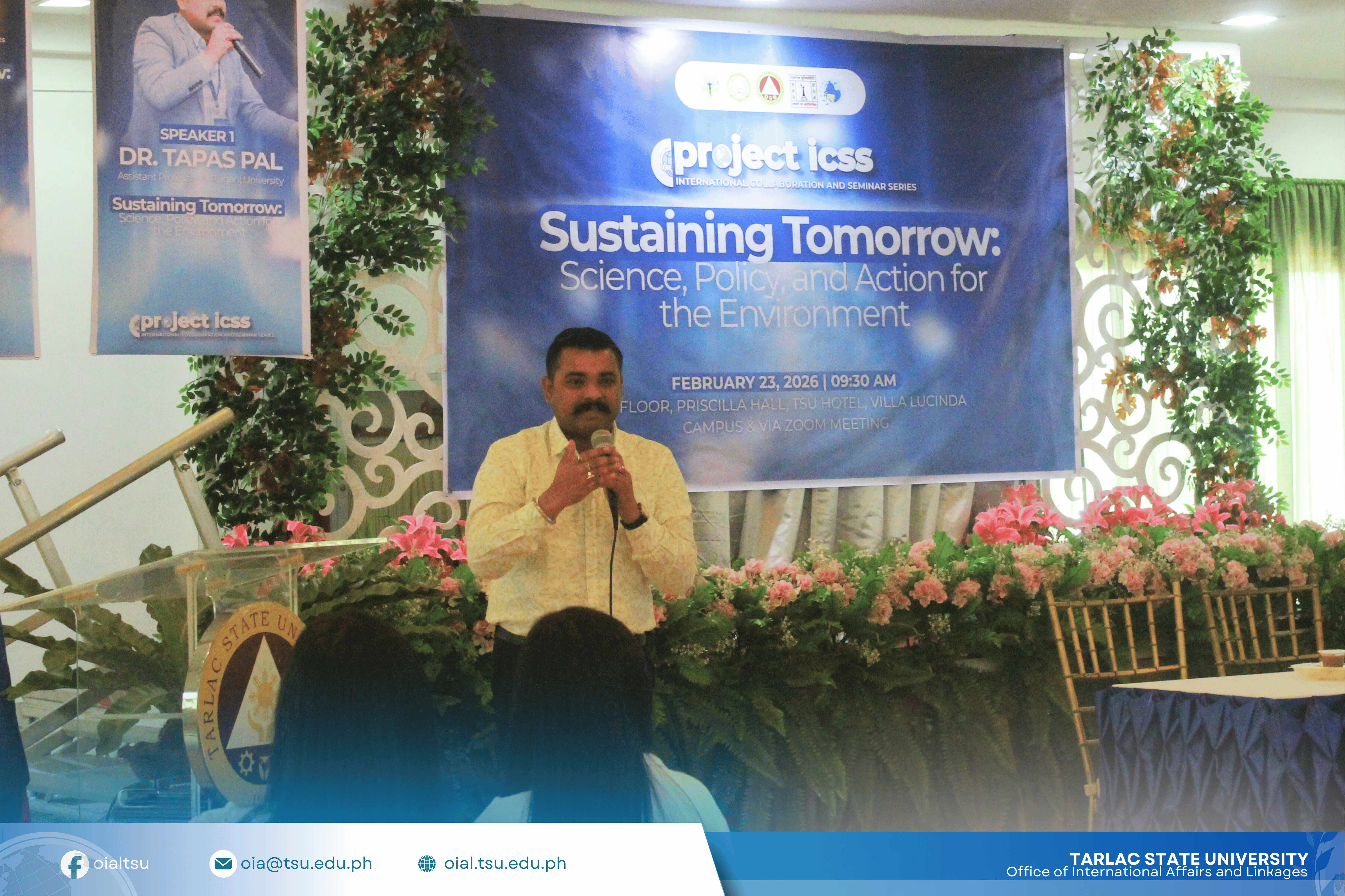
Opening the seminar sessions, Dr. Tapas Pal of RU explored the Delta Knowledge System and its relevance to climate resilience. Drawing from case studies in the Sundarbans and Majuli, he illustrated how delta communities adapt to disaster-prone environments through mangrove stewardship, traditional embankments, folk forecasting, adaptive livelihoods, raised stilt houses known as Chang Ghar, bamboo riverbank stabilization, vetiver-based bioengineering, and participatory erosion mapping. He emphasized that these practices are empirical, place-based knowledge systems refined across generations, contributing significantly to biodiversity conservation and disaster risk reduction.
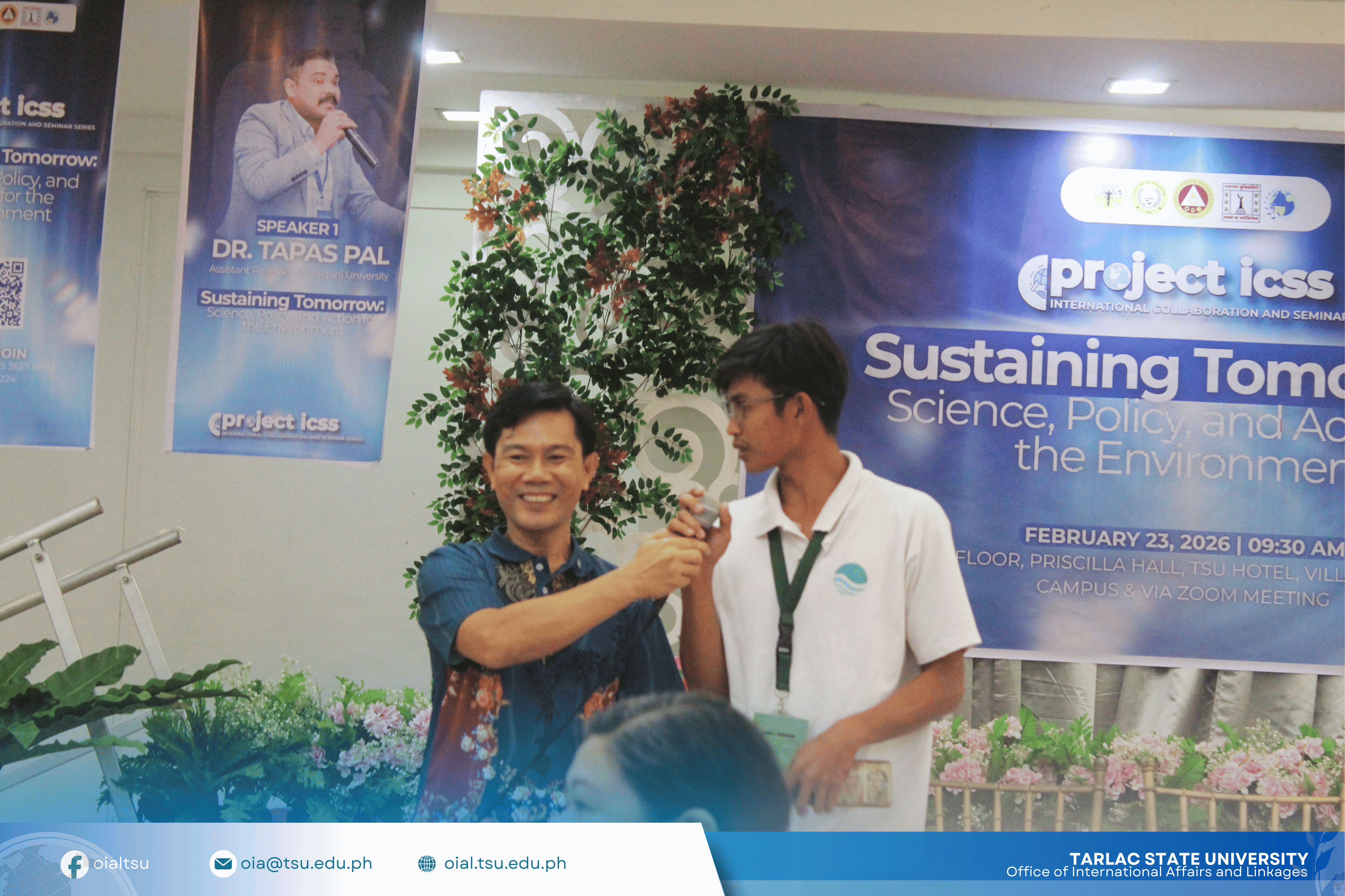
Shifting the lens to policy and education, Dr. Erwin C. Mina of TSU introduced ILK HEPA (Indigenous and Local Knowledge in Higher Education, Policy, and Action) as a framework for embedding Indigenous ecological knowledge into academic institutions and governance systems. In the Philippine context, he highlighted that legal instruments such as the Indigenous Peoples' Rights Act of 1997 affirm ancestral domain rights. However, he underscored that meaningful sustainability requires the genuine integration of Indigenous Knowledge Systems into curricula, research, and evidence-based environmental policymaking while centering Indigenous leadership.
Concluding the series, Dr. Alma M. Corpuz of TSU emphasized the imperative of translating scientific research into policy and community action. Referencing the Planetary Boundaries framework, she explained that several ecological limits have already been exceeded and stressed the urgency of bridging the research–practice gap through Evidence-Based Public Policy Research. She further noted that educators play a crucial role in empowering students to become environmental advocates whose actions extend beyond the classroom.
Together, the three seminars formed a coherent framework in which community knowledge strengthens resilience, Indigenous policy integration ensures inclusive governance, and scientific research provides evidence-based solutions. Through the collaboration of TSU and RU, the event demonstrated that sustaining tomorrow demands the integration of science, Indigenous wisdom, education, and policy into a unified and decisive sustainability agenda.